Mattress buying guide
Regal Superb vs. Shetland Superb: Questions to Ask Before Choosing
A mattress is a small landscape of materials, springs and stitched layers, all working beneath the sleeper’s weight. If you’re comparing Vispring’s Regal Superb and Shetland Superb, the names alone won’t tell you which one will feel right. The useful clues are found in current specifications, the way each bed responds to your body, and the practical terms attached to its purchase.
Published October 15, 2026
Begin with the model in front of you
Luxury mattress names can suggest a hierarchy, a character or a particular sleeping experience. But a name is not a specification sheet. Models may change over time, and details can differ by size, configuration, market or retailer. Even a familiar model name may be attached to options that are not identical in every showroom.
For the Regal Superb and Shetland Superb, start by requesting the current written specifications for the exact versions you are considering. Ask the retailer to identify the model, size, firmness or comfort options, and any configuration choices on the quote. Then compare those documents line by line rather than relying on a summary, an old review, or a general description of the collection.
This is particularly important when a mattress is made to order or offered in multiple configurations. A broad statement about a model may not describe the specific bed being quoted. If a detail matters to your decision—such as the spring system, upholstery materials or mattress depth—have it confirmed in writing.
- Is this the current specification for the model and size being quoted?
- Are there selectable firmness or comfort options?
- Does the specification change with size or configuration?
- Can the retailer provide the construction details in writing?
What is inside each mattress?
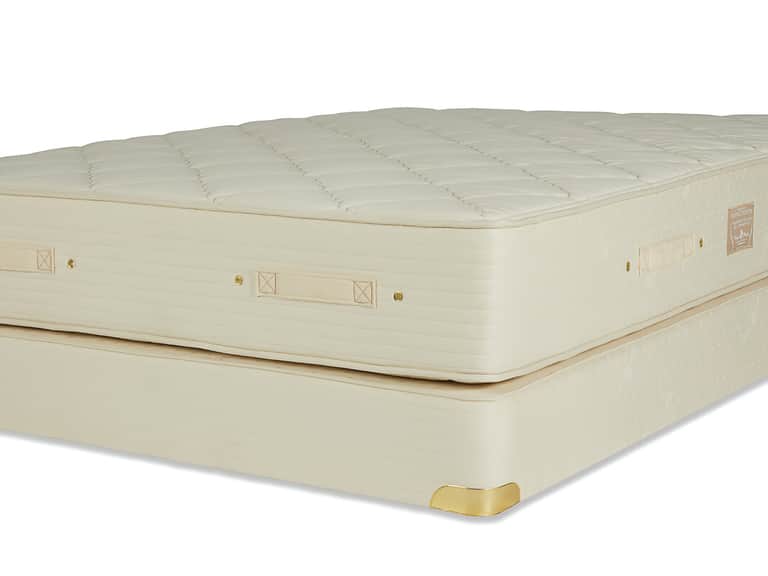
A mattress is a layered structure. Its spring unit carries and distributes load; the upholstery above it shapes the first impression of softness, cushioning and temperature; the cover and border help hold the assembly together. The balance among these elements matters more than any single headline feature.
Ask for a clear account of the construction of both the Regal Superb and Shetland Superb. What type of spring system does each use? How many spring layers are present, if more than one? What fillings sit above or around the springs, and in what order? Is the stated spring count tied to a particular mattress size? Are the materials natural, synthetic, or blended?
These questions are not a test of technical vocabulary. They are a way to understand what the retailer means by “support,” “comfort” or “breathability.” Two mattresses can use similar-sounding materials yet arrange them differently. Conversely, different materials may contribute to a similar overall sensation. Construction descriptions help reveal what is actually being compared.
Ask, too, whether the upholstery is fixed or whether the mattress is designed to be turned or rotated. Some beds are intended to be turned over; others have a designated sleeping side. The correct care routine depends on the exact product, so don’t assume that advice for one model applies to the other.
Useful follow-up questions include:
- What are the main components, from the sleep surface down to the spring unit?
- Are the fillings distributed evenly or arranged in distinct layers?
- Is the spring system pocketed, linked, or another type?
- What is the mattress depth, and does it vary by size or option?
- Does either model require turning, rotation, or a particular care schedule?
Translate “firmness” into a real sensation
Firmness is often presented as a simple scale, but the word can mean different things to different people. One sleeper may describe a mattress as supportive; another may call the same surface hard. A person’s weight, proportions, preferred sleeping position and sensitivity to pressure all influence how a bed feels.
Ask the retailer to explain the available firmness or comfort options for each model, and verify that the options apply to the precise size and configuration you are considering. If a numerical scale is used, ask what the scale represents and whether it is the manufacturer’s rating or the retailer’s interpretation. A number without a clear reference point can create an illusion of precision.
When you test a mattress, give your body time to settle. Lie in your usual sleeping position rather than briefly sitting on the edge. Notice whether your shoulders and hips feel pressured, whether your lower back feels supported, and whether you can change position comfortably. If you share a bed, both sleepers should test it where possible: comfort is personal, and one person’s preference may not match the other’s.
Do not confuse a cushioned surface with weak support, or a firm first impression with better alignment. The goal is not to select the most luxurious-sounding or hardest option. It is to find a surface that feels comfortable to you while supporting a relaxed, sustainable sleeping posture.
Try asking:
- Which firmness choices are available for each model today?
- Can the firmness be selected separately on each side of a shared mattress?
- How does the showroom sample compare with the configuration on the quote?
- What options exist if the delivered mattress feels different from the floor sample?
Consider your sleeping position without treating it as a rulebook
Sleeping position offers a useful starting point, not a final verdict. Side sleepers often pay close attention to pressure around the shoulders and hips. Back sleepers may focus on whether the surface feels balanced beneath the pelvis and lower back. Stomach sleepers may be especially alert to excessive sink at the midsection. These are tendencies, not universal prescriptions.
People move during the night, and many do not stay in one position. If you shift between side and back sleeping, test the mattress in both positions. If you sleep with a partner, consider how much movement travels across the bed and whether each person can settle without disturbing the other. Ask the retailer to explain how the construction is intended to respond to movement, but rely on a direct test wherever possible.
Existing pillows, bed frames and mattress toppers also affect the experience. A pillow that is too high or too low can make an otherwise comfortable mattress feel wrong, especially when side sleeping. A thick topper can soften the surface and change pressure relief, but it may also obscure the feel you are trying to compare. Test each model under conditions as close as practical to your own bedroom setup.
Check the support system beneath the mattress
The bed beneath a mattress is not merely a stand. A base can affect how the mattress is supported, how it sits, and whether the manufacturer’s requirements are met. Before choosing either model, confirm the type of foundation recommended for it.
Ask whether your existing base is compatible, whether slat spacing or another feature matters, and whether a particular foundation is required to preserve the warranty. If you are buying a new base, ask for the full cost and dimensions together with the mattress quote. A mattress that fits the room but not the existing frame can turn a considered purchase into a costly problem.
For an adjustable base, verify compatibility directly rather than assuming that a mattress can flex simply because it contains springs. Confirm any restrictions on the base, mattress size, frame, or warranty. Likewise, check the combined height of the mattress and foundation. A deeper mattress can alter the height of the bed, the fit of fitted sheets and the ease of getting in and out.
Compare prices as complete packages
When two luxury mattresses carry different prices, the amount alone does not explain the difference. Compare the exact quoted configurations, not just the model names. Confirm the size, firmness selection, base or foundation, delivery, setup, removal of an old mattress, taxes and any other charges. A quote that excludes these details can make two options look more comparable than they are.
Ask whether the price is for the mattress only or for a complete bed set. If a foundation is recommended, find out whether it is optional, required, or simply included in the retailer’s package. Check whether the quote includes accessories that you may not need. Request an itemized breakdown so that you can see what you are paying for and compare like with like.
Budget also includes the cost of ownership. Consider the expected care routine, the availability of suitable sheets and protectors, and the terms for service or warranty claims. A lower purchase price is not automatically better value, but a premium price is not proof that a particular bed is right for your body. The value lies in the fit between the product, your needs and the terms of the sale.
Make the showroom test more useful
A showroom is a controlled landscape: quiet, carefully arranged and unlike the private conditions of home. Still, a deliberate test can answer more than a quick sit-down. Wear comfortable clothing, remove bulky outer layers, and lie down in the positions you usually adopt. Give each mattress several minutes, and return to the first one after trying the second. Immediate impressions can change with comparison.
Pay attention to specific sensations rather than asking only, “Which one feels better?” Does the surface cushion pressure points? Can you turn without effort? Do you feel stable near the edge? Does the bed seem comfortable in the position you use most? If you share the mattress, can both sleepers find a comfortable posture at the same time?
Keep notes. Record the model, size, options, quoted price and the sensations you noticed. Without notes, several mattresses can blur into a single impression by the time you leave the store. If the retailer permits a home trial, clarify its duration, eligibility rules, return or exchange fees, and the condition required for a return before paying.
Ask about delivery, trial periods and aftercare
The decision does not end at the checkout. Delivery access can matter as much as the mattress’s dimensions. Measure doorways, stairwells, hallways and the room itself, especially in older buildings or homes with tight turns. Ask whether delivery includes bringing the mattress to the bedroom, unpacking it, setting it on the base and removing packaging.
Confirm the delivery window and what happens if access is difficult. If an old mattress is to be removed, ask whether that service is available, what it costs and whether the old bed must meet specific conditions. These details are ordinary logistics, but they shape the first day with a new mattress.
Trial terms deserve equally careful reading. A “sleep trial” may have minimum-use periods, registration requirements, fees or limits on returns and exchanges. Ask whether a comfort exchange is available and whether it applies to both the Regal Superb and Shetland Superb. Do not rely on a verbal shorthand such as “you can try it at home”; request the terms in writing.
For the warranty, distinguish between coverage for manufacturing defects and a promise that the mattress will remain comfortable for a particular length of time. Ask what counts as a covered fault, how a claim is assessed, what documentation is required, and whether the bed must be used on an approved base. A warranty is most useful when its boundaries are understood before purchase.
Care begins with the instructions
Mattress care is not one-size-fits-all. Turning, rotation, airing and cleaning instructions can depend on the construction and upholstery. Follow the current guidance for the exact model rather than general advice found elsewhere. If one mattress is designed to be used on a single side, turning it may be inappropriate; if rotation is recommended, ask how often and in which direction.
A breathable, well-fitted protector can help reduce the effects of spills and everyday soil, but ask whether the manufacturer has specific recommendations. Cleaners and excessive moisture may damage some materials or finishes. For routine care, use the maker’s instructions and avoid improvised treatments that could affect the mattress or its warranty.
Also consider room conditions. Adequate ventilation and a suitable support base help maintain a clean, dry sleep environment. If you use a topper to alter comfort, remember that it adds another layer to care for and can change the bed’s feel. The mattress you test in a store may not feel identical once additional bedding is added.
A practical comparison checklist
Before deciding between the Regal Superb and Shetland Superb, gather the same information for each. A simple side-by-side record can reveal whether you are comparing genuine differences or incomplete descriptions.
- Identity: Confirm the model name, current specification, size and configuration.
- Construction: Record the spring system, layers, fillings, cover and mattress depth.
- Comfort: Note available firmness choices and how each feels in your regular sleeping positions.
- Compatibility: Verify the base or foundation requirements and any adjustable-base restrictions.
- Price: Compare itemized quotes that include the same components and services.
- Delivery: Check access, setup, packaging removal and old-mattress removal.
- Trial and warranty: Read eligibility, fees, exclusions and claim procedures.
- Care: Confirm turning or rotation guidance, cleaning instructions and protector recommendations.
Choose by evidence, then by feel
The clearest comparison is built from two kinds of evidence. The first is documentary: current specifications, written quotes, delivery arrangements and warranty terms. The second is personal: how the mattress feels beneath your body, in the positions you use, over enough time to notice its response.
Neither kind can replace the other. A beautifully detailed construction description cannot tell you with certainty how a bed will feel after a full night. A comfortable showroom impression cannot answer questions about the exact configuration, the foundation or the cost of a return. Bring both kinds of evidence together.
There may be no universally superior choice between the Regal Superb and Shetland Superb. The right decision depends on the versions currently offered, the comfort each provides you, and the practical terms that accompany the purchase. Ask precise questions, compare like with like, and take time to test. Beneath the quiet surface of a mattress is a system built to respond night after night; choosing well begins by understanding what that system is—and how it meets your own needs.
Questions to take to the retailer
- Can you provide the current written specification for both models in my chosen size?
- What construction or material differences distinguish the two configurations being quoted?
- What firmness options are available, and can I test the exact one I would receive?
- Will my current bed base support either mattress according to the manufacturer’s requirements?
- What are the complete delivered prices, including setup and any removal services?
- What do the trial, exchange and warranty terms require in practice?
- What care instructions apply specifically to each model?