Mattress guide
How to Choose a Luxury Mattress That Suits Your Sleep Style
A luxury mattress is not simply a softer surface or a more elaborate label. Its value lies in how its materials, support system, and feel work together for the person sleeping on it. Begin with your habits and comfort needs, then compare construction, practical details, and the experience of lying on the mattress yourself.
Start with the sleeper, not the label
Mattress shopping can feel like entering a landscape of unfamiliar terms: pocket springs, natural fillings, firmness ratings, hand tufting, and comfort layers. In the luxury category, the descriptions may be especially detailed, but the first question is more direct: What does your body need from a sleep surface?
Think about the position you spend the most time in, the places where pressure builds, whether you tend to feel warm at night, and how much movement you notice from a partner. Consider the mattress you sleep on now, too. If you wake with a sore shoulder, feel unsupported around your lower back, or regularly shift to escape a pressure point, those experiences can help guide your search. They are useful clues, not a diagnosis or a guarantee that a new mattress will resolve pain.
Luxury is often associated with premium materials and considered construction, but a high price does not tell you whether a mattress will suit your body. Personal comfort depends on the interaction between your shape, sleep position, weight distribution, bedding, and preferences. The right choice is the one that feels supportive and comfortable to you over time—not the one with the most impressive specifications on paper.
How sleep position changes the search
Your usual sleep position affects where your body meets the mattress and how pressure is distributed. It can help narrow the field, although no position calls for a single universal firmness.
Side sleepers: consider pressure relief
Side sleeping concentrates more body weight around the shoulder and hip. A surface that feels too firm may press sharply in those areas, while one that allows the body to sink too far may feel unstable. Look for a balance: cushioning where the body meets the mattress, with enough underlying support to keep the torso from sagging. When testing a mattress, notice whether your shoulder and hip feel relaxed rather than compressed.
Pillow height matters here as well. A pillow that is too low or too high can affect the neck’s alignment, making it harder to judge the mattress in isolation. Try a pillow close to the one you normally use, and assess the whole arrangement rather than treating the mattress as the only part of the sleep system.
Back sleepers: seek an even, supported feel
Back sleepers often prefer a surface that supports the body evenly, without leaving the hips to sink noticeably below the torso. The ideal sensation is individual: some people like a more buoyant, firm feel, while others prefer a cushioned top with steady support beneath it. Pay attention to the lower back and pelvis. Do you feel held up without a hard gap or an uncomfortable arch?
Stomach sleepers: watch for excessive sink
For stomach sleepers, a mattress that lets the midsection sink too deeply may feel uncomfortable. Many look for a steadier surface that keeps the torso from dipping. Testing in your usual position is especially useful because a mattress that seems comfortable while sitting or lying on your back can feel quite different once you turn over.
Combination sleepers: test transitions
If you change positions through the night, consider how easily the mattress responds as you move. Some sleepers like a surface that pushes back readily; others prefer deeper cushioning. Try rolling from side to back and back again. A mattress can feel inviting when you first lie down yet make movement feel effortful if its top layers envelop you more than you prefer.
Firmness is a description, not a measurement
Terms such as soft, medium, and firm are useful starting points, but they are not a universal scale. One maker’s medium may feel different from another’s, and the same mattress can feel different to two people. Body size, shape, sleeping position, and personal sensitivity all influence how firmness is perceived.
That is why a label should prompt questions rather than settle the decision. Ask what the comfort choices mean within a particular collection, whether the support system is the same across options, and how the surface changes with different upholstery or fillings. If a retailer uses a numbered firmness scale, ask how it is defined and whether it applies across the whole range.
Try not to choose based on the idea that a particular firmness is automatically healthier. A mattress should feel comfortable and supportive for your own needs. If you have ongoing or severe pain, consult an appropriate health professional rather than relying on a mattress description as medical advice.
Look beneath the surface: materials and construction
The materials inside a mattress influence its feel, temperature, resilience, and maintenance. In an innerspring mattress, coils form a central support system, while layers of upholstery sit above and around them. Those layers might include natural fibres, foam, or blends. The design is not defined by a single component: the way the materials are combined matters as much as their individual names.
In a pocket-spring design, coils are enclosed individually, allowing them to respond more independently than coils connected in a linked unit. That construction may help limit the spread of movement across the surface, although performance varies with the full mattress design and the person using it. Coil count alone is not a reliable shortcut to comfort or quality. Spring gauge, arrangement, upholstery, and edge construction also affect the experience.
Natural fibres such as wool and cotton are often used in mattress upholstery. Their feel depends on how they are layered and compressed. Wool is known for its springy structure and capacity to manage moisture, but the presence of a natural material by itself does not establish that a mattress will sleep cool or suit every sleeper. If temperature is a concern, test the complete mattress and ask what materials lie closest to the surface.
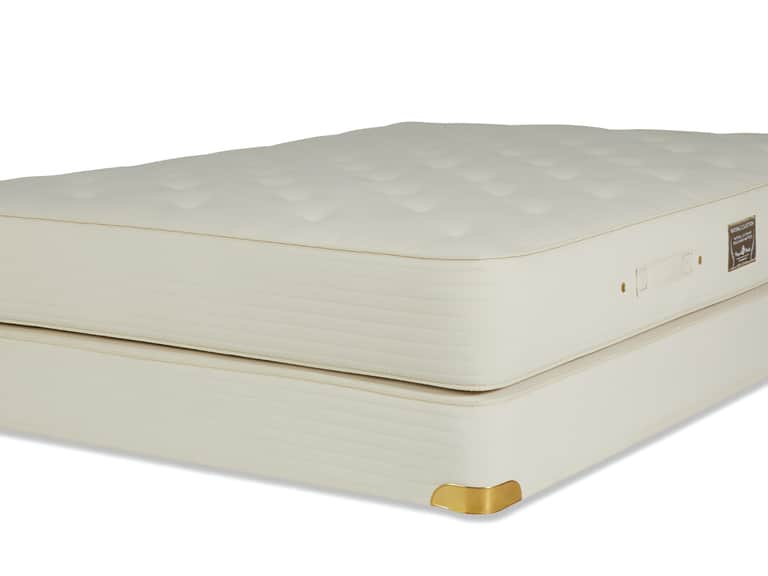
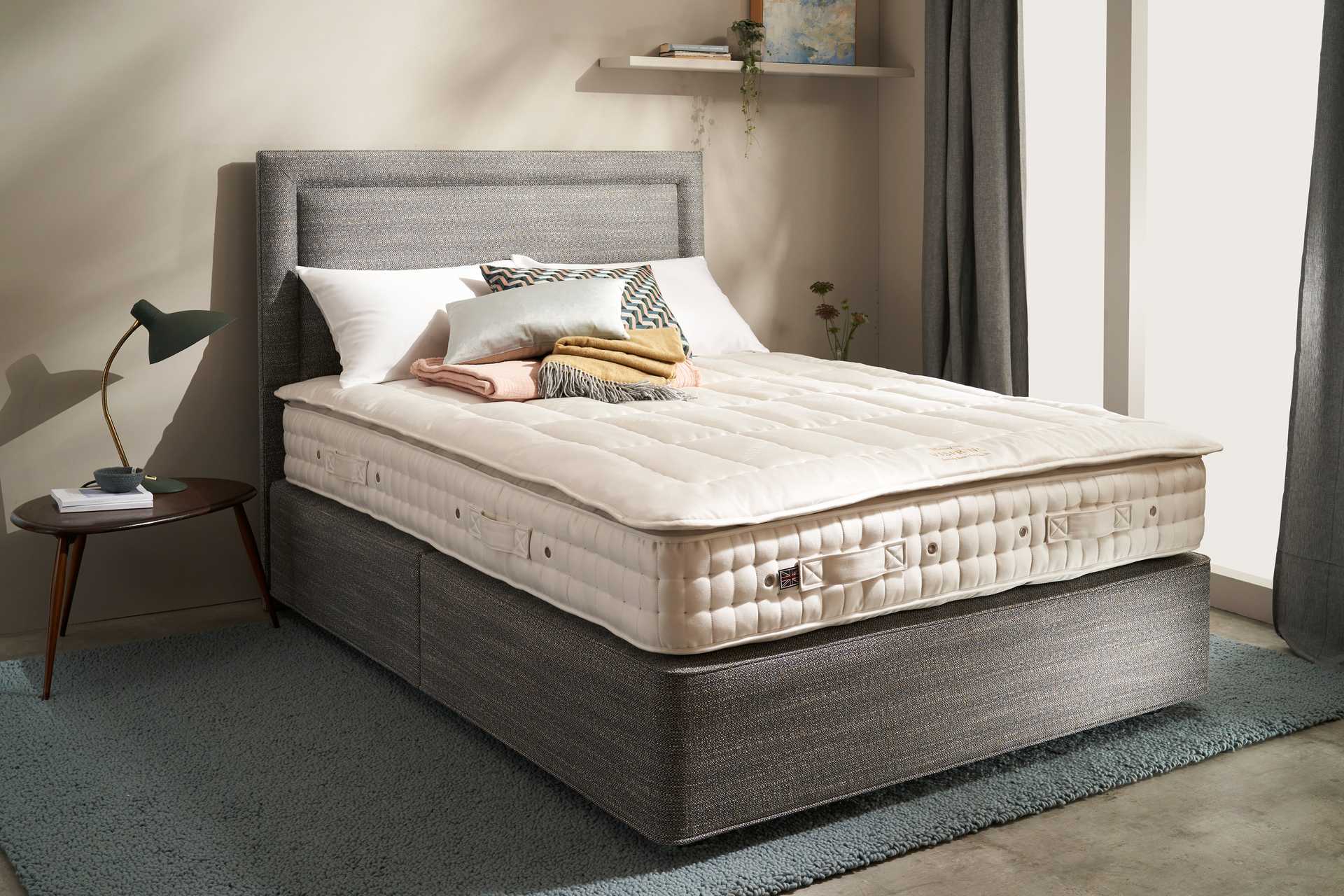
For example, the Vispring Regal Superb combines a pocket-spring system with layers of wool, cotton, and horsetail in its described construction. It is a useful illustration of how a luxury mattress can pair a responsive spring foundation with multiple upholstery materials. Product specifications can help explain the design, but they cannot tell you exactly how it will feel to your body. Treat them as a map for comparison, then test the terrain in person.
Ask about the mattress’s total depth, the materials used in its comfort layers, and how the layers are held in place. Hand tufting, for instance, is a construction method that compresses and secures upholstery at intervals. It may contribute to the mattress’s structure, but the presence of handwork alone is not proof that a particular model is right for you. Focus on the combined result: the feel of the surface, the support beneath it, and the care it requires.
Compare Vispring comfort choices carefully
When exploring Vispring options, compare models by more than their names or place in a collection. Look for differences in spring configuration, upholstery materials, mattress depth, and available comfort choices. Ask whether a particular option changes the feel of the surface, the support system, or both. A clear explanation of those differences is more helpful than a ranking that assumes one model is best for everyone.
Luxury mattresses can have complex specifications, but the decision does not need to be complicated. Use a short list of priorities to keep the comparison grounded: preferred firmness, sleeping position, pressure relief, temperature comfort, partner movement, and any practical constraints. Then find out which details distinguish the models that meet your needs.
Consider whether the bed is sold as a mattress alone or as part of a set, and confirm what foundation is recommended. A mattress’s feel can be affected by the surface beneath it, so the retailer should be able to explain compatibility requirements. If you are keeping an existing bed frame or foundation, check its condition and specifications before purchase rather than assuming it will work with a new mattress.
Make a showroom visit count
A showroom visit is most useful when it resembles your real night rather than a brief test drive. Wear comfortable clothing, take time to settle into each position you normally sleep in, and remain on each mattress long enough to notice whether the initial sensation changes. A few seconds on your back may reveal little about what happens to your shoulder when you lie on your side.
Keep the comparison manageable. Test a small number of mattresses at a time, moving between them in a consistent order. Notice specific sensations rather than asking only, “Which one feels best?” For example: Does the shoulder feel pressured? Does the lower back feel supported? Is it easy to turn? Does the mattress feel stable near the edge? This makes differences easier to remember after several trials.
If you share a bed, test it together when possible. Each person should try their usual sleep position and discuss firmness preferences before choosing. A mattress that works well for one sleeper may not feel the same to the other. Ask whether the available configuration can accommodate different preferences, and get the answer in writing if it affects your purchase.
Do not hesitate to ask the salesperson to clarify unfamiliar terms. Request the written specification, explanation of comfort options, and details about what is included in the price. A calm, informed conversation can reveal more than a polished product description.
The trial and return policy is part of the decision
A mattress may feel different after a full night than it does in a showroom. Before buying, read the retailer’s trial or return terms closely. Policies vary, and the word “trial” does not necessarily mean that a return is free or unconditional. Check the length of the period, when it begins, whether there is a minimum break-in time, and whether collection or restocking fees apply.
Also confirm what happens if the mattress is exchanged rather than returned, whether a different comfort option is available, and what condition the product must be in. Ask about delivery, old-mattress removal, and any packaging requirements. Keep the policy and receipt accessible so the practical steps are clear if you need them.
If a trial is offered, use it deliberately. Give yourself time to adjust, but keep notes on comfort and wake-ups so you can distinguish a brief adjustment period from a persistent mismatch. Follow the maker’s instructions for setup and care, and do not assume that every retailer handles trials in the same way.
Check dimensions, care, and the room around the bed
Dimensions are easy to overlook when attention is fixed on comfort. Verify the mattress size against the bed frame, the bedroom’s available space, stairways, doorways, and any tight turns on the delivery route. Confirm the mattress’s height as well: a deeper model can change the combined height of the bed, especially when paired with a substantial foundation or topper.
Care instructions matter over the life of the mattress. Ask whether the model should be rotated, turned, or kept in one orientation, and how often the manufacturer recommends doing so. Not all designs are intended to be flipped. Use a suitable base and follow the manufacturer’s guidance to help protect the mattress and preserve any applicable warranty.
A mattress protector can reduce exposure to spills, skin oils, and everyday wear, but check that its fit and materials do not noticeably change the feel you selected. A topper can add a layer of cushioning, though it also changes the sleep surface. The Vispring Heaven Luxury Mattress Topper, described as a blend of cotton and British wool and approximately 2.8 inches high, is an example of an added comfort layer. Consider a topper only if you want to alter the surface feel; it is not a substitute for choosing a mattress with support that suits you.
A practical checklist before you buy
Before making a final decision, use this checklist to turn a broad search into a clear comparison:
- Identify your most common sleep positions and the comfort problems you hope to avoid.
- Test mattresses in those positions, taking enough time to assess pressure, support, and ease of movement.
- Treat firmness labels as product-specific guidance, not a universal rating.
- Compare spring construction, upholstery materials, total depth, and the available comfort choices.
- Ask what foundation is recommended and whether your current bed base is compatible.
- Confirm dimensions, delivery access, setup requirements, and old-mattress removal arrangements.
- Read trial, exchange, return, warranty, and care terms before paying.
- Discuss comfort preferences with anyone who will share the bed, and make sure both sleepers test the finalists.
Keep the checklist beside the product specifications, not in place of them. The numbers and materials help explain what is inside; your experience helps determine whether that construction works for you.
Choose for the nights ahead
A good luxury mattress decision is built from small observations. The shoulder that relaxes instead of pressing into the surface. The steady support that remains when you roll onto your back. The confidence that the bed fits your room and that the return terms are clear. Those details may be less dramatic than a long materials list, but they are closer to the nightly experience that matters.
Begin with your sleep style, then compare comfort choices and construction without treating any single feature as a guarantee. Visit a showroom if you can, take your usual position, and give yourself time to notice how the mattress responds. Finally, check the dimensions, foundation requirements, care guidance, and trial policy. The best choice is not the mattress with the grandest description; it is the one whose support and feel make sense for your body, habits, and home.